Wadi Rum Travel Guide: A Personal Journey Through Jordan’s Valley of the Moon
- Brigitta Kukely
- Feb 1
- 5 min read

Updated: Feb 2

The first thing I noticed in Wadi Rum wasn’t the color of the sand or the towering mountains—it was the space.Real space.The kind that makes you instinctively take a deeper breath.
I had seen photos, read blog posts, watched films, but nothing truly prepared me for what it feels like to stand there: silence, stone, and sky all around me, and a strange mix of feeling incredibly small and fully present at the same time.
This isn’t just a guide to Wadi Rum.It’s a personal travel diary, a practical article filled with useful tips, and a love letter to one of Jordan’s most extraordinary places.
Where is Wadi Rum, and why is it so special?
Wadi Rum—officially known as the Wadi Rum Protected Area—is located in southern Jordan:
about 1 hour from Aqaba
about 1.5 hours from Petra
It’s often called the Valley of the Moon, and for good reason. Red sand dunes, monumental sandstone mountains, narrow canyons, and ancient rock carvings come together to form this breathtaking desert landscape. The area is a UNESCO World Heritage Site, recognized for both its natural beauty and cultural significance.
Wadi Rum isn’t just visually stunning—it creates a feeling.It slows you down, quiets your mind, and gently invites you to step away from the constant noise of everyday life.
Arriving in Wadi Rum: First Impressions

I arrived in Wadi Rum in the early morning. As the asphalt ended and the sand began, the signal disappeared—and somehow, so did the rush.
The mountains rose suddenly, as if they were growing straight out of the earth. There was no gradual transition. Just stone, sky, and silence.
At the visitor center, I switched into a Bedouin guide’s 4x4. From that moment on, Wadi Rum was no longer a destination—it was another world.
A Landscape That Feels Alive
Many people think the desert is empty.Wadi Rum is the exact opposite.
The landscape is constantly changing:
vast, open valleys narrow into canyons
smooth sand dunes give way to towering rock walls
natural stone bridges arch toward the sky
The colors shift with the time of day—golden in the morning, red in the afternoon, deep orange by evening. Every hour reveals a different face.
Walking here feels ancient. There are no signs, no crowds—just your instincts and the rhythm of the land.
Travel Diary: Slowing Down in the Desert
Time works differently in Wadi Rum.
There are no schedules—only sunrise and sunset.No notifications.No sense of “what’s next.”For the first time in a long while, I felt that I wasn’t rushing.
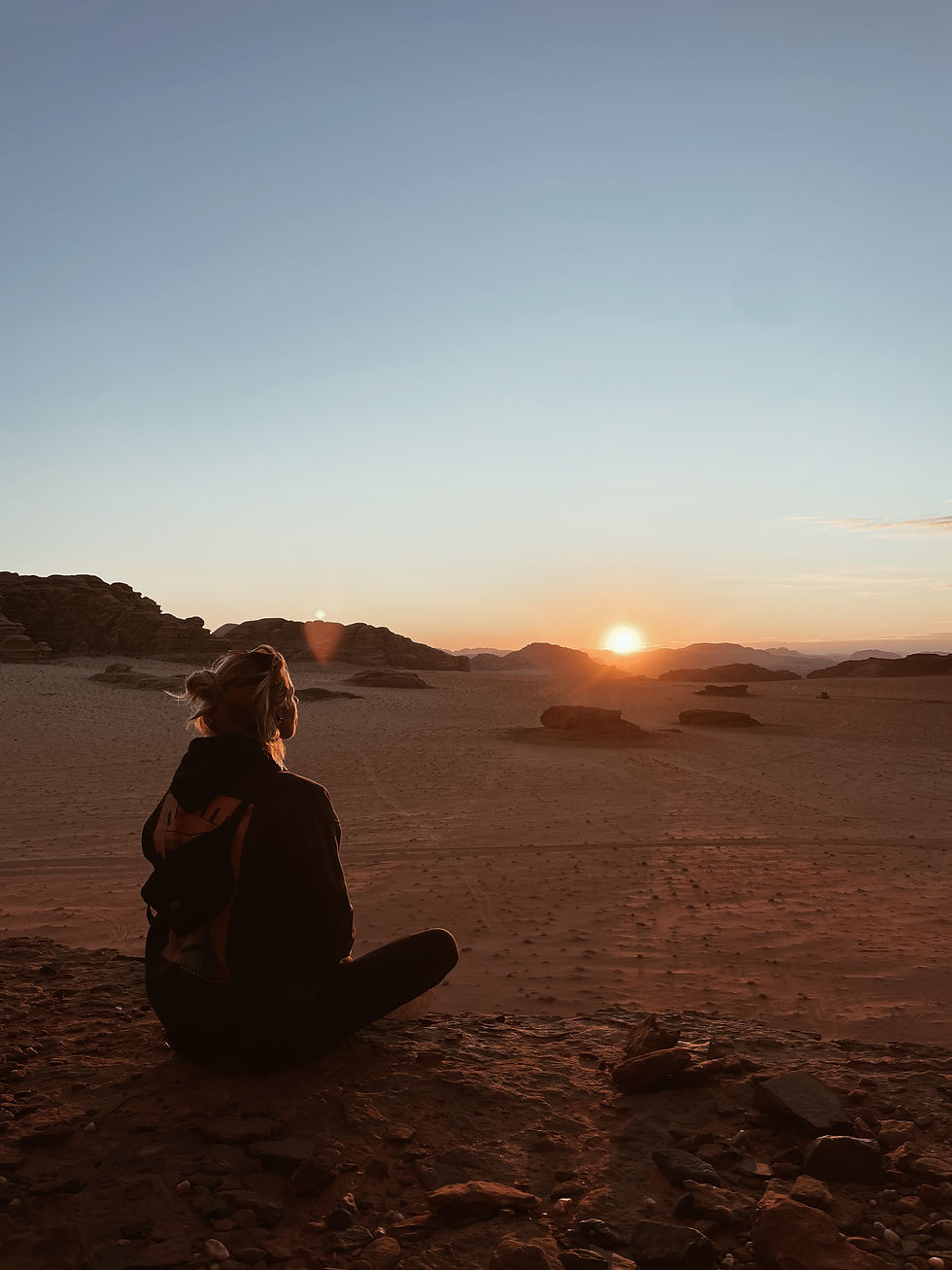
I sat on a rock, watching the wind shape the sand, listening to nothing at all.
The silence was deep and complete—not uncomfortable, but calming. Somehow, everything felt like it had fallen into place.
History Carved into Stone
Wadi Rum is not only a natural wonder, but a historical one as well.
Human presence here dates back more than 12,000 years. On the rock faces, you can find:
ancient rock carvings
Thamudic, Nabataean, and early Arabic inscriptions
traces of old trade routes
Running your fingers over these carvings is almost impossible to comprehend—someone stood here thousands of years ago, touching the very same stone.
The Nabataeans, the builders of Petra, also lived in Wadi Rum and adapted to desert life in extraordinary ways.
Lawrence of Arabia and Modern Fame

Wadi Rum gained international fame in the early 20th century through T. E. Lawrence, better known as Lawrence of Arabia. He traveled through the area during the Arab Revolt and described it as:
“Vast, echoing, and godlike.”
It’s a description that still feels accurate today.
In recent decades, Wadi Rum has become a filming location for numerous movies, including:
The Martian
Dune
Star Wars
Prometheus
Standing here, it’s easy to believe you’ve stepped onto another planet.
Bedouin Life and Desert Hospitality
The soul of Wadi Rum lives in its Bedouin people.
For generations, they led a nomadic life here, knowing every movement of the desert. Today, many run desert camps, tours, and experiences—but their mindset remains unchanged.
Staying in a Bedouin camp was one of the highlights of my journey.
Dinner was prepared slowly over the fire. We ate together, sitting on carpets. Sweet tea kept appearing. There was no rush, no performance—just genuine hospitality.
Bedouins in Wadi Rum: Life in the Desert
What makes Wadi Rum truly special isn’t only the landscape, but the people who have lived here for generations. For centuries, Bedouins followed a nomadic way of life, moving through the desert with their animals, guided by water sources and the rhythm of the seasons.
Today, many live semi-nomadic lives or operate desert camps, but their worldview hasn’t changed. The desert is not an obstacle—it is home. Time moves slowly, community comes before everything, and guests are always treated with respect.
Bedouin hospitality is quiet and natural. It’s never exaggerated—it simply exists. A cup of tea, a place by the fire, and the feeling that you are exactly where you’re meant to be.
Bedouin Food: Simple, Slow, and Shared
The foundation of Bedouin cuisine is simplicity. The food is nourishing, slow-cooked, and always shared.
The most well-known dish is zarb—meat, vegetables, and rice cooked for hours in an underground oven beneath hot coals. It’s not just a meal, but a communal event—everyone waits together, eats together.
Other common dishes include:
mansaf – lamb with rice and fermented yogurt sauce
freshly baked flatbreads
simple lentil and vegetable dishes
An essential part of every meal is Bedouin tea: strong black tea, often flavored with sage or cardamom. It’s not just something you’re offered to drink—it’s an invitation to slow down.
Night in Wadi Rum: Sleeping Under the Stars

If you’re wondering whether it’s worth staying overnight—yes, absolutely.
At night, the desert transforms completely. There is almost no light pollution, and the sky fills with stars. The Milky Way is clearly visible.
Accommodation options include:
traditional Bedouin tents
sleeping under the open sky
modern “bubble tents” with panoramic views
I slept beneath the stars. Rarely have I felt so small—and so deeply at peace.
What Can You Do in Wadi Rum?
Beyond the stillness, plenty of adventure awaits.
Jeep Tours
The most popular way to explore the desert. A good guide shares stories, shows hidden places, and knows exactly when it’s time to stop and embrace the silence.
Hiking
From easy walks to challenging scrambles, there’s something for everyone. Untamed, unmarked, and breathtaking.
Rock Climbing
Wadi Rum is world-famous for its sandstone climbing routes.
Camel Rides
Slow, traditional, and almost meditative. A completely different perspective on the desert.
When Is the Best Time to Visit Wadi Rum?
Best Times to Visit
March–May
September–November
Summer (June–August): extremely hot daytime temperatures.
Winter (December–February): cooler days, cold nights, and fewer visitors.
What to Pack for Wadi Rum
light, breathable clothing
a warm layer for the night
a scarf (for sun and sand protection)
sunscreen and sunglasses
comfortable shoes
a reusable water bottle
a power bank
Dressing modestly is a sign of respect.
Responsible Travel in Wadi Rum
This is a fragile environment.
leave no trash behind
stay on designated routes
do not touch or damage rock carvings
support local Bedouin businesses
The survival of the desert depends on us, too.
Why Wadi Rum Changes You
When I left, there was still sand in my shoes—and a sense of calm inside me.
Wadi Rum teaches you that less is enough.Less noise.Less rushing.More presence.
It doesn’t try to impress you.It simply waits.And if you slow down, it rewards you.
Final Thoughts: Is Wadi Rum Worth Visiting?
Without question, yes.
Wadi Rum is not only one of the most beautiful places in Jordan—it was also one of the deepest travel experiences I’ve ever had.
It stays with you.In the silence.In the sky.In your breath.
The desert doesn’t ask for attention.It offers perspective.


Comments